
Last updated October 17, 2026
 Metal roofing
 Architectural shingles
 Tile roofing
 GAF
GAF Owens Corning
 Flat & low-slope
Free roof inspection with deck photos before we talk money - GAF and Owens Corning certified installation
Seasonal Roofing Care for Pasadena: Year-Round Homeowner’s Guide
Pasadena averages just 19 inches of rain a year, but nearly 70% of it falls inside a 10-week stretch from January into late March. That single fact changes how you should care for your roof. Most national roofing advice assumes four seasons with snow, ice, and summer downpours, but Pasadena homeowners live under a different set of rules shaped by Santa Ana winds, a long dry heat cycle, and mature trees that drop debris in patterns unique to foothill neighborhoods. This guide walks through what to do in each month, which tasks matter most, and how a calendar-based routine keeps you out of emergency roof repair territory. For a deeper dive, see The Complete Guide to Roofing in Pasadena.
Styles & brands we work with
Quick Answer
Seasonal roof care in Pasadena works best when planned around two high-risk windows: the Santa Ana wind season from October through December and the rain-heavy stretch from January through March. The two maintenance windows are late summer (August and September, when heat cracks tiles and you prep for wind season) and late spring (April through June, when you clean up after rain and inspect before the heat returns). Homeowners who schedule a roof inspection once in late summer and once after the last rain spend less on emergency repairs than those who wait for a leak.
Table of Contents
- The Pasadena Roof Calendar: Two High-Risk Windows, Two Maintenance Windows
- Month-by-Month Roof Care Calendar for Pasadena
- Why Late-Summer Heat Cracks More Tiles in Pasadena Than Rain Does
- Mature Tree Canopy in Linda Vista and San Rafael Hills: Debris Patterns That Differ From Hillside Homes
- The Post-Rain Attic Inspection: A Flashlight Routine Any Homeowner Can Do
- How Documented Seasonal Care Protects Your Warranty and Insurance Claims
- Common Mistakes to Avoid
- When to Call a Professional
- Frequently Asked Questions
- The Bottom Line
The Pasadena Roof Calendar: Two High-Risk Windows, Two Maintenance Windows
Roofing problems in Pasadena do not spread evenly across the year. They cluster. The first high-risk window arrives with Santa Ana wind season, typically October through December, when dry gusts of 40 to 60 miles per hour strip loose flashing, lift shingle edges, and hurl tree branches across roof valleys. The second begins when the rains concentrate from January through March, turning every small opening left by those winds into an active leak path. Between these two windows sits the rest of the year: long stretches of clear skies and heat that do damage slowly, invisibly, until the next wind or rain event exposes it.
The two maintenance windows are late summer and late spring. Late summer, roughly August through September, is when heat-related tile cracking shows itself and when trees have finished dropping their heaviest leaf and seed load. Late spring, April through June, is the clean-up and inspection window after the last rain, before the heat cycle returns. If you do nothing else, schedule professional roof inspections in September and again in May. Those two visits catch the majority of problems before they become water in your house.
This approach matters more in Pasadena than in other Southern California cities because our rainfall is so concentrated. Drainage systems that only carry water for ten weeks a year still need to perform perfectly during those ten weeks. Valleys, scuppers, downspouts, and flashing details that sit dry and neglected for months get tested all at once. A roof that has not been looked at since the previous spring faces a lot of unknowns when the first atmospheric river arrives.
Month-by-Month Roof Care Calendar for Pasadena
This calendar maps actual Pasadena weather patterns to specific roof tasks. It assumes a typical year: dry heat from June through September, Santa Ana winds peaking in October and November, rain concentrated January through March, and a moderate spring transition.
January
January is peak rain season in Pasadena, and the roof is under its heaviest load of the year. Your job this month is observation, not repair. After each significant rain, walk the perimeter of your house and look for water stains on exterior walls below rooflines. Inside, check ceilings in every room for discoloration, especially corners and around chimneys and skylights. Check the attic after heavy rain with a flashlight, looking for any wet spots on the underside of the roof deck. Keep gutters clear between storms so water has a path off the roof rather than pooling at the edge. If you suspect a leak, call a roofer quickly: water entering the house in January does more damage per day than at any other time of year because everything is already saturated.
February
Rain continues in Pasadena through February, often in multi-day systems rather than quick downpours. The risk shifts from volume to duration: prolonged wetting finds small openings that a fast storm might miss. Watch for slow drips that appear only after hours of steady rain. Moss and algae growth peak in February on shaded roof sections, especially on north-facing slopes and under tree canopy. Debris that has been building in valleys since November now holds water against shingles, so if you can safely clear gutters from the ground with a hose extension, do it. Do not climb onto a wet roof; wait for a dry day or call a roofer.
March
The last heavy rains usually arrive in March, sometimes extending into early April. This is the month when small, nagging leaks become obvious because the roof has been wet for weeks. March is also the best month to schedule a post-rain inspection: the ground is still visible, the air is cool, and any damage from the winter is fresh enough to diagnose accurately. During week three of the year, we see homeowners in Pasadena start to wonder whether the damp spot in the hallway ceiling is from the winter or something older. If you’re unsure whether to handle repairs yourself or call a pro, read our DIY vs Professional Roofing: The Pasadena Homeowner’s Decision Guide. A post-rain inspection answers that question definitively. After the last meaningful rain, schedule this visit.
April
April begins the first real maintenance window. Rain has mostly stopped, the roof is drying out, and temperatures are mild enough for inspectors to walk the surface without heat-related safety issues. Clean all gutters and downspouts completely, because this is when winter debris is heaviest. Check flashing around chimneys, skylights, and plumbing vents for lifting or sealant cracks. Look at the condition of tile edges and shingle seams for any movement caused by winter storms. If a section of the roof drains slowly, April is the month to address valley changes or adding a diverter. Tree work near the roofline should happen in April or May, before the next wind season, so branches are not hanging over the roof when Santa Ana winds return.
May
May is the final month of the spring maintenance window before heat returns. Most professional roof inspections in Pasadena happen in May or early June for good reason: all winter damage is visible, and the roof has not yet entered peak heat expansion. If you skipped an April gutter cleaning, May is your last comfortable chance. Check attic ventilation: as temperatures rise, a poorly ventilated attic pushes heat into the roof deck and accelerates shingle aging. Look at your roof from the street at a distance; sagging sections, lifted shingles, or shifted tiles are easier to see from the ground than from up close. In Pasadena neighborhoods with mature trees, May is also when leaf litter from spring blooming trees accumulates in roof valleys, so a second debris clearing will prevent it rotting in place over the hot summer.
June
June is the transition into heat season. Daytime roof surface temperatures in Pasadena routinely exceed 140 degrees this month. The roof expands; materials move. New leaks are rare in June unless a sealant fails from heat, but the expansion cycle that starts now is what causes cracks to form in tile and seams to pull apart in modified bitumen to finish later in the summer. Around the house, check that attic vents are clear of dust and insulation, because attic heat accelerates roof deck deterioration. If you have a whole-house fan or a powered attic ventilator, June is the month to test it. A hot attic with a working fan ages roofing more slowly than a hot attic with a broken fan.
July
July is peak heat in Pasadena, and the roof heats the most. This is the month when flat roof coatings start to bubble and crack if they were already weakened. Tile roofs make faint popping sounds as materials adjust; that is normal thermal movement. Walk around the house and look up at eaves and rakes: heat can soften and loosen roofing cement in exposed areas. The biggest July task is shade management. If branches from mature trees hang within six feet of the roof surface, trim them now. Those limbs will not cause leaks in July, but in October, when the Santa Ana winds arrive, they will scrub against the roof and strip material. Trimming in July nearly eliminates that wind-season risk.
August
August is the first month of the late-summer maintenance window and the beginning of heat-crack season. Pasadena roofs absorb months of cumulative heat by this point, and the earliest tile cracks from thermal stress appear now, especially on the south- and west-facing slopes that catch afternoon sun. Look for hairline fractures at tile edges and along ridge caps from the ground with binoculars if you have them. Flat and low-slope roofs show heat damage as small blisters or alligator cracking in the coating. This is also when dried-out sealant around skylights and flashings starts to pull away from the surface. Schedule your pre-wind-season roof inspection in August or early September. Every day you wait gives wind season more time to find the weak spots first.
September
September is the most important month on the Pasadena roof calendar. Santa Ana winds can begin as early as late September, and every vulnerability on the roof gets tested by those dry, gusting winds. Your priority is a full inspection that addresses loose flashing, lifted shingle edges, cracked tile, worn sealant, and debris in valleys. Clean gutters thoroughly, because leaf litter from mature trees accumulates heaviest in late summer and early fall. Check that chimney caps and vents are secure. If the roof has not been inspected since before summer, do it now. This is the one month where a small repair made in the fall prevents a much larger repair in the winter.
October
Santa Ana wind season begins in earnest in Pasadena. This is the highest-risk month for wind damage. Winds gust hard, dry, and from the northeast, which is the exact direction that hits many Pasadena foothill homes broadside on their roof faces. After each Santa Ana event, walk the perimeter and look for shingles in the yard, tile fragments, lifted flashing, or displaced ridge caps. Check the roof surface with binoculars for anything out of place. If a tree branch comes down onto the roof, have the roof inspected where it struck even if the damage looks cosmetic. Wind-driven debris can puncture the underlayment, which allows water in during winter rains even though the surface layer looks intact.
November
Wind and rain risk overlap in November. The first meaningful rain typically arrives, but Santa Ana winds also peak. This combination catches many Pasadena homeowners off guard because the roof gets attacked from multiple directions. Keep gutters clear of leaves, since fall leaf drop coincides with the first rains and clogs fast. Check that downspouts extend far enough from the foundation. After the first storm, do an attic check: now is when you will see early signs of small leaks that need fixing before heavier winter storms. If the roof tiles or shingles shifted in October wind events, November is your last dry window to secure them before rain season peaks.
December
December is the final prep month before the rain concentration arrives. Santa Ana winds can continue, and a dry December in Pasadena is common, creating a false sense of security. Resist the temptation to wait until January. Roofing crews in Pasadena stay busy later into the year when homeowners delay fall repairs, so your ability to schedule gets tighter toward the month’s end. If you need help finding the right company, see How to Hire a Roofing Contractor in Pasadena: A Step-by-Step Guide. Clear gutters one final time after most leaves have dropped. Check attic ventilation once more before the attic becomes hot and difficult to work in next summer. If any small roofing issue has been flagged throughout the year and deferred, December is the deadline to fix it.
Why Late-Summer Heat Cracks More Tiles in Pasadena Than Rain Does
Rain gets the blame for most roofing damage because water leaks are visceral and immediate. But in Pasadena, heat cycles quietly create more tile and shingle failures than any single storm. Concrete and clay roof tiles, common throughout Pasadena homes, expand and contract with temperature changes. During a typical summer day, a roof surface moves from a 55-degree overnight low to a 140-degree afternoon high. That is an 85-degree swing every single day, repeated for months. The expansion and contraction works on the tile like bending a paper clip back and forth: eventually, the material fatigues and cracks along the thinnest point, usually at the tile edge, under the nail hole, or along the ridge cap.
South-facing and west-facing slopes crack first because they absorb the most direct afternoon sun. We see this pattern repeatedly in Pasadena neighborhoods where homes line east-west streets: the south-facing roof slope ages faster than the north-facing slope on the same house. A homeowner who only looks at the front of the house may miss developing cracks on the back slope until a leak appears. August and September are the months to look carefully, because that is when cumulative heat fatigue crosses into visible cracking. The shoulder months of October and November are when cracked tiles often dislodge during wind events, but the failure itself started in the heat.
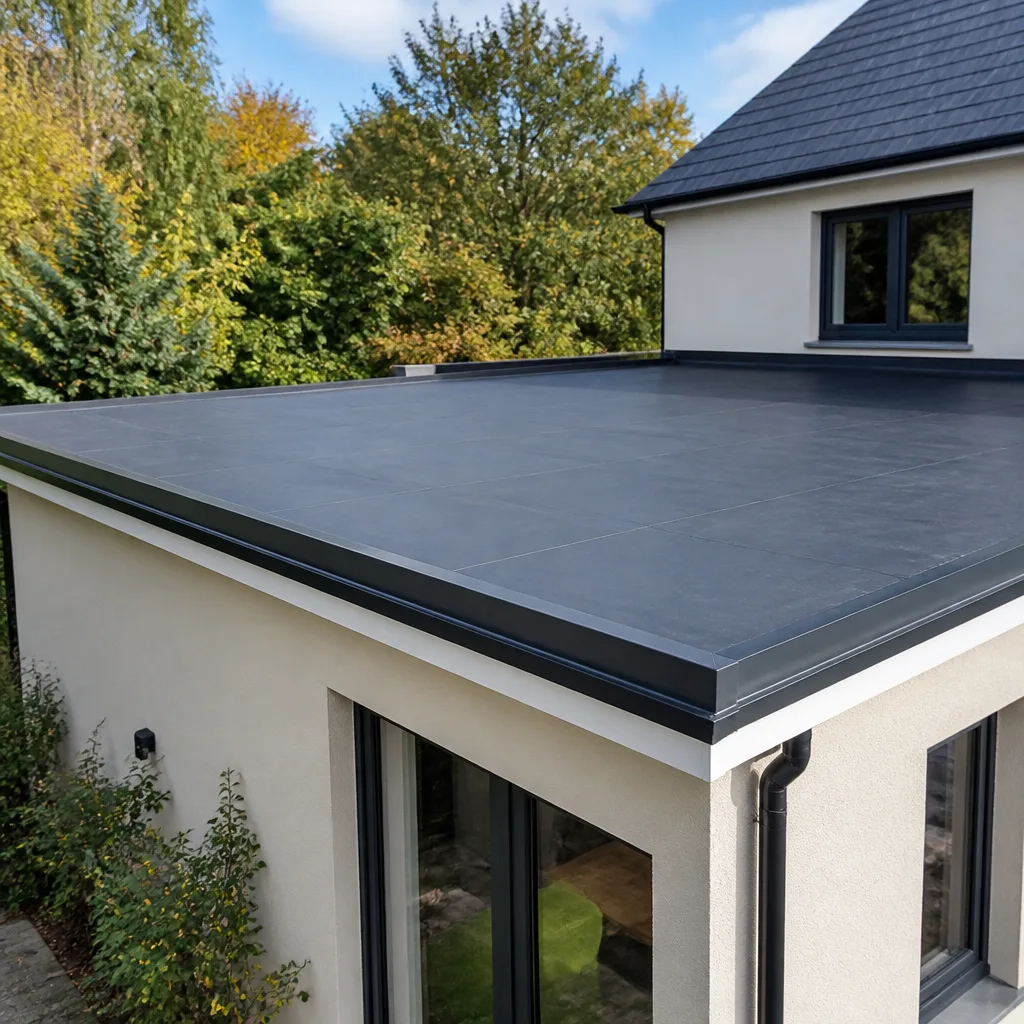
Flat roof coatings respond to the same cycle differently. They flex, bubble, and eventually split at seams. The damage looks like small blisters or long, jagged cracks that follow the seams of the underlying material. Homeowners in Pasadena sometimes mistake these for purely cosmetic issues, but once a coating splits, water reaches the membrane beneath during the wet season, and repairs become internal rather than surface-level.
This is also why the timing of roof repairs matters. A cracked tile found in August can usually be replaced in a straightforward repair. A cracked tile that goes unnoticed until wind season may dislodge entirely, and a dislodged tile in a rainstorm turns a structural gap into a leak. The heat does not care about your schedule, but the calendar does: inspections in the late-summer window catch heat damage before wind and rain convert it into water damage.
Mature Tree Canopy in Linda Vista and San Rafael Hills: Debris Patterns That Differ From Hillside Homes
Pasadena is not a uniform roofing environment. Two homes five miles apart can face completely different debris and moss conditions depending on the tree canopy above them. In neighborhoods like Linda Vista and San Rafael Hills, where mature oak, sycamore, and eucalyptus trees form continuous canopy over roofs, the seasonal care routine shifts. Flat hillside homes with no tree cover deal with wind and heat; tree-canopy homes deal with rot, moss, and moisture retention.
Continuous shade keeps roof surfaces cooler, which sounds beneficial until you understand what it means for debris. Leaves, twigs, seed pods, and bark collect in shaded valleys and do not dry out the way they would on an exposed roof. They hold moisture against the surface for weeks at a time, and that moisture supports moss and algae growth that you rarely see on open hillside roofs in Pasadena. Moss grows in the seams and under tile edges, lifting materials and creating capillary paths for water to move upward. Over time, moss roots can crack the surface of organic shingles and compromise tile underlayment. The shaded roof also dries slower after rain, which extends the window during which any small leak can develop.
These canopy conditions require a modified seasonal routine. Homeowners in Linda Vista, San Rafael Hills, and other tree-dense Pasadena neighborhoods benefit from more frequent debris clearing than the rest of the city, usually three or four times per year rather than two. Fall leaf drop is heavier and more prolonged. Spring brings flowers, seed pods, and new growth. Summer heat, counterintuitively, causes eucalyptus and sycamore to shed bark and branches, which land on roofs just before wind season begins. A gutter on a tree-canopy home in Pasadena can fill completely in a single month during peak drop season. Downspouts clog more frequently, and valley debris becomes a structural issue if not cleared before December.
The fix is not tree removal; mature canopy is part of what makes those Pasadena neighborhoods desirable. The fix is a debris-management rhythm that accounts for the shade’s effects. Specifically: clear valleys in spring after leaf-out, clear again in late summer before wind season, keep gutters clear through fall, and check for moss whenever you inspect. If moss appears, addressing it before the rainy stretch is far cheaper than treating the leaks it causes afterward.
The Post-Rain Attic Inspection: A Flashlight Routine Any Homeowner Can Do
You do not need to climb onto a roof to spot early signs of trouble. After each major rain in Pasadena, especially during the January through March window, a ten-minute attic check with a good flashlight catches problems while they are still small. Here is exactly what to look for and how to do it safely.
- Start in daylight. Turn off any attic light and let your eyes adjust. Daylight penetration is the first diagnostic: if you can see points of light coming through the roof deck, those are openings that water can also pass through. Mark them mentally and confirm with the flashlight.
- Scan the underside of the roof deck. Work from the eaves toward the ridge in slow passes. Look for dark spots, water stains, or any area that looks wet or recently dried. Fresh stains are darker and have defined edges; older stains look faded and may have rings.
- Focus on penetrations. The points where pipes, vents, chimneys, and skylights pass through the roof are the most common leak locations. Look closely at the decking around each penetration for staining or rust on metal parts.
- Check insulation. Wet insulation mats down and loses its loft. If a section of attic insulation looks compressed or darkened compared to surrounding material, water has been reaching it. Touch it with a gloved hand if safe: damp insulation confirms an active leak.
- Look at nails and fasteners. In cold or damp conditions, roofing nails can show condensation. More importantly, look for rust streaks on the underside of the deck, which indicate water has been traveling along fasteners from above.
- Check the attic floor. Water that enters through the roof often travels down rafters and pools on the attic floor or drywall ceiling. Look for stains, mineral deposits, or warped areas along the perimeter.
- Photograph anything you find. Documented notes help you track whether a stain is growing over time, and they give a roofer a head start when you call.
Do this once a month during rain season. The pattern matters more than any single observation: a stain that appears after one storm and does not worsen is different from a stain that grows every time it rains. The latter needs professional attention before it spreads from the roof deck into your ceiling drywall.
Note on attic safety: attics in Pasadena homes are often tight, hot, and full of hazards from exposed nails to loose wiring. Wear long sleeves, pants, gloves, and a dust mask. Step only on joists and truss chords, never on the drywall ceiling between them. If the attic is difficult to access or you are uncomfortable, skip the DIY check and call a professional roofer.
How Documented Seasonal Care Protects Your Warranty and Insurance Claims
Every roof warranty, whether from the material manufacturer or the installing contractor, includes language about proper maintenance. In practice, warranty claims are rarely denied because a homeowner skipped one gutter cleaning. But they are routinely challenged when the claimant cannot show any evidence of care. The roof has failed; the manufacturer or contractor wants to know why; the answer that never helps is “we just left it alone.”
Documented seasonal care changes the conversation. A homeowner who can show inspection records, dated photos of the roof surface throughout the year, and receipts for professional maintenance has a much stronger position when a warranty claim arises. This is not a theoretical advantage; in our experience working with Pasadena homeowners, the ones with documented care histories get claims resolved faster and with less back-and-forth.
The same principle applies to insurance. If your roof sustains wind damage from a Santa Ana event or water damage during a winter storm, your insurance carrier will ask about the roof’s condition before the loss. Pre-storm photos, inspection reports, and repair receipts establish that the roof was in maintained condition. Without those documents, the adjuster may classify the damage as wear-and-tear rather than a covered loss, and wear-and-tear exclusions are standard in homeowner policies.
What to document:
- Date-stamped photos of the roof from multiple angles, twice per year minimum
- Inspection reports from professional roofers, with the date and findings listed
- Receipts for repairs, gutter cleaning, debris removal, and any roofing work
- Notes from your own post-rain attic checks, including photo attachments
- Records of tree trimming near the roofline, since this shows proactive damage prevention
Keep these in a folder on your phone or computer. Ten minutes of documentation each season is a cheap insurance policy against warranty and claims disputes later. And when you work with a roofer who provides written pricing and written inspection findings, you get this documentation as part of the service rather than having to create it from scratch. Browse our more guides & resources for year-round roof care tips.
Common Mistakes to Avoid
- Waiting for a leak to schedule roof maintenance. By the time water shows up inside your Pasadena home, the roof failure has been developing for months. Leaks are the end of the story, not the beginning.
- Cleaning gutters only in fall. In tree-canopy neighborhoods like Linda Vista, gutters fill multiple times per year. If you only clear them before winter, you spend spring and summer with water backing up along the roof edge.
- Ignoring the attic in dry months. The best time to inspect a roof is often from underneath, and in Pasadena the attic is comfortable enough for DIY inspection only from fall through spring. Use those months; the summer attic is a different experience.
- Trimming trees too close to wind season. If you wait until November to trim branches over the roof, Santa Ana winds may beat you to it. Tree work belongs in July, before branch weight and wind combine.
- Treating all roof slopes as equal. South-facing and west-facing slopes in Pasadena age faster from heat, while north-facing slopes under canopy age faster from moisture. Inspect each slope for its own failure pattern.
- Skipping documentation. Unrecorded maintenance is nearly useless in warranty and insurance disputes. Photograph your roof after every inspection and keep the records.
- Postponing small repairs from the fall inspection. The gap between September and January is short, but roofing crews book up fast in Pasadena during that window. A small flashing repair deferred becomes a large leak repair by February.
When to Call a Professional
Most of the seasonal tasks in this guide are observation and basic maintenance. But some situations call for a trained roofer with the right equipment and the judgment that comes from seeing hundreds of Pasadena roofs. Call a professional if you see daylight through the roof deck in the attic, if a post-rain stain grows between inspections, if Santa Ana winds dislodge any roofing material, if you find cracked tiles on a slope you cannot safely access, or if moss has visibly lifted shingle or tile edges. Roof work near steep pitches carries serious fall risk, and getting onto a wet or steep roof without training is not worth the emergency room visit. Roof repair in Pasadena should always start with an inspection and a written price. Birchbark Roofing Pasadena offers free estimates in Pasadena, and our Birchbark Roofing Pasadena home page has more on how we approach inspections. Call (626) 657-5397 to schedule yours.
Frequently Asked Questions
Twice per year. Schedule one inspection in late summer, between August and September, before Santa Ana wind season, and a second in late spring, between April and June, after the last rain. This rhythm catches heat damage before winds arrive and water damage before summer heat bakes it in. For homes under heavy tree canopy in neighborhoods like Linda Vista or San Rafael Hills, add a third check in early fall for debris accumulation. Call (626) 657-5397 to set up a seasonal inspection with our roofing company in Pasadena.
Most roof inspections in Pasadena run between $150 and $400 depending on roof size, pitch, and access difficulty, with many companies crediting the inspection fee toward repair work if damage is found. Gutter and valley cleaning as a standalone service typically ranges from $150 to $350 per visit. Repairs found during seasonal inspections vary widely by scope, but a cracked tile replacement commonly falls between $200 and $500, while flashing work runs higher. Every estimate from us includes a written price before work begins, so you know your number up front. Call (626) 657-5397 for an exact quote.
You can do a meaningful inspection from the ground and from inside your attic without ever climbing a ladder. Use binoculars to scan for cracked tiles, lifted shingles, and debris from the street. Use the attic flashlight routine described above after rains. Walking on the roof surface is where homeowners get hurt, especially on tile roofs, steep pitches, or two-story Pasadena homes. If something on the roof needs closer inspection, that is a professional roofer’s job, not a DIY task.
They do, and often more dramatically than rain. Santa Ana winds in Pasadena routinely gust over 50 miles per hour, which is enough to lift loose shingles, tear flashing at seams, and send branches and debris across roof surfaces. The damage is usually at flashings, ridge caps, and roof edges rather than the middle of the field. After every significant wind event in October, November, and December, do a quick visual check from the ground and look for roofing material in the yard.
A thorough post-rain inspection covers the roof surface, flashings around all penetrations, gutters and downspouts, attic conditions, and areas where water tends to pool or flow. The inspector looks for fresh water staining, displaced material, sealant failures, and debris patterns that indicate slow drainage. This inspection is most useful when done after the last significant rain, usually in March or April, when all winter damage is visible and the roof has dried enough to walk.
Regular documented maintenance supports warranty claims by establishing that the roof was properly cared for before any failure. Material warranties from manufacturers like Owens Corning, Tamko, Atlas, and IKO all assume ordinary maintenance, and when a claim is filed, the presence of inspection records and repair receipts strengthens your position. Without documentation, a manufacturer or contractor may classify the failure as neglect. Keep photos, receipts, and inspection reports from every seasonal check.
The Bottom Line
Pasadena roofs fail on a schedule. Heat cracks tiles through late summer, winds pick at the edges in fall, and winter rains turn every small opening into a leak. The homeowner who works around these patterns spends less, stays drier, and keeps warranty claims strong when something does go wrong. Two inspections per year, one in the late-summer maintenance window and one after the last rain, cover the majority of what goes wrong on Pasadena roofs. Add debris clearing around your specific tree canopy, keep attic records after each storm, and address small repairs before the next high-risk window opens. That is the whole system. If you want a professional set of eyes on your roof, roof replacement in Pasadena or repair estimates start with a phone call to Birchbark Roofing Pasadena at (626) 657-5397.
Written by Erik Lindgren, Owner at Birchbark Roofing Pasadena, serving Pasadena since 2000.
See the difference
 Before
 After
After Before
 After
After Before
 After
After